
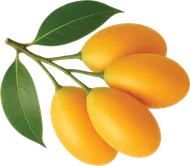
Marian plum is a small, egg-shaped tropical fruit related to the mango, known in Thai as mayongchid (มะยงชิด) and sometimes sold in English as plum mango. Ripe fruit has golden-orange skin, thick juicy flesh and a sweet taste that ends on a light sour note. In Thailand it is closely tied to Nakhon Nayok province, where “Mayongchid Nakhon Nayok” is a registered geographical indication (GI) and where Chan Neung Orchard (สวนชั้นหนึ่ง) grows the Thoonklao variety.
What is Marian plum?
Marian plum is the fruit of Bouea macrophylla, a tropical tree in the Anacardiaceae family, which also includes mango and cashew. The University of Florida’s horticulture extension lists maprang, marian plum, plum mango and gandaria among its common names, and notes that premium sweet fruit is often marketed as “mayong chid” (UF/IFAS, Maprang (Bouea macrophylla Griff.) Fruit Trees).
The fruit looks like a miniature mango. It is oval to egg-shaped, green while it grows and yellow-orange to orange-red when ripe. Inside, the yellow-orange flesh surrounds a single seed with a noticeable purple colour, which makes the fruit easy to recognise once it is cut open.
Mayongchid, maprang or mayong haang: what is the difference?
Thai shoppers use several names for this fruit, and the names mostly describe taste rather than separate fruits. A Thai PBS explainer traces the groups back to a Thai gardening manual from 1888 (B.E. 2431), which sorted the fruit by how sweet or sour it is (Thai PBS):
| Thai name | Romanised | Taste |
|---|---|---|
| มะปรางหวาน | maprang wan (sweet maprang) | Sweet, with no sourness |
| มะยงชิด | mayongchid | Mostly sweet, with a little sourness |
| มะยงห่าง | mayong haang | More sour than sweet |
| มะปรางเปรี้ยว | maprang priao (sour maprang) | Sour, with only slight sweetness |
Mayongchid is the balanced group: sweet first, with just enough sourness to taste fresh. Thai PBS also notes that maprang fruit is mostly smaller than mayongchid. Today mayongchid is the type usually sold as premium fresh fruit and in gift boxes.
Botanical labels are less tidy than the market names. Some Thai sources, including the Thai PBS piece, file mayongchid under the closely related Bouea oppositifolia, while horticultural references such as UF/IFAS treat it as a sweet dessert type of Bouea macrophylla. For buyers, the useful differences are taste and size, not the Latin name.
What does Marian plum taste like?
A ripe Thoonklao mayongchid tastes sweet first and finishes with a light, clean sourness. The flesh is thick, dense and crisp, juicy without being mushy, and the fruit has a distinct aroma. UF/IFAS describes the flavour range of the species as sweet to sweet-tart, with notes of mango, apricot and plum.
Colour tells you how it will taste. Fruit that is still mostly green is sharply sour, while fruit with deep, even yellow-orange skin has developed its full sweetness. Most people eat Marian plum fresh and chilled. It is also made into juice, fruit in light syrup (loi kaew) and desserts.
Why does Nakhon Nayok Marian plum have a GI?
A geographical indication protects a product name that is linked to the place it comes from. “Mayongchid Nakhon Nayok” (มะยงชิดนครนายก) is registered as a Thai GI with the Department of Intellectual Property, and growers who meet the standard receive permission to use the Thai GI symbol.
Chan Neung Orchard holds that permission (certificate อสช. 24800/2568, valid 23 September 2025 to 22 September 2027). Our plot in Ban Na district is also certified to Thailand’s Good Agricultural Practice standard, TAS 9001-2021 (มกษ. 9001-2564). We bag every fruit by hand on the tree and use dairy-cow manure to reduce chemical use.
It is a family orchard with more than 30 years of growing behind it, run today by Maneenuch Nimitmongkon. You can read more about Chan Neung Orchard and its certificates.
What is the Thoonklao variety?
Thoonklao (ทูลเกล้า) is the variety we grow. It is registered as a Thai plant variety under the name Thoonklao Nakhon Nayok (certificate 1/2553, from 2010). What sets it apart:
- Large, egg-shaped fruit that ripens from green to yellow-orange or orange-red, with smooth skin.
- Thick, dense, crisp flesh with a juicy bite.
- A small, often undeveloped seed, so a high share of each fruit is edible flesh.
- A sweet-led flavour with a light sour finish and a distinct aroma.
At harvest we pick each fruit at the right ripeness, sort by hand for shape and skin, grade by size and pack to reduce bruising.
When is Marian plum in season?
In Nakhon Nayok the fresh season runs from late January to March, and the trees give one main crop a year. Fresh fruit is graded by how many fruits make up a kilogram: Jumbo (12-14 per kg), Premium (15-17), Medium (18-20) and Small (20 or more). Once the harvest ends, dried fruit is the way to enjoy Marian plum until the next season.
Where can you buy Marian plum?
During the season, fresh mayongchid appears at fruit stalls and markets across Thailand. If origin matters to you, look for the Thai GI symbol with the name Mayongchid Nakhon Nayok, or buy directly from a certified orchard.
From Chan Neung Orchard you can order fresh Marian plum by grade from late January to March, delivered within Thailand. Outside the season we sell dried Marian plum with no added sugar all year; it contains no preservatives, and its sweetness comes from the fruit’s natural sugar. Importers, cafés and businesses can also ask about wholesale and frozen fruit.
To order fresh fruit for the coming season, or dried Marian plum today, see how to order from Chan Neung Orchard.
 Lazada